Saturday, July 4, 2009

Australia and US are now Marxist States

With Prime Minister Kevin Rudd exercising control over Australia's media, Obama is taking his lead. And even the spin of Rudd is bing used in Iran right now. The Iranians are blaming Britain for the protests of the last few weeks at the rigged election, thus taking the spotlight away from their totalitarian 'tendencies'. Maybe Kevin Rudd is a very well qualified Dictator.

From Frontpagemag:

Obama Dismantles Free Press

2009 July 2

One of the lessons history teaches us is that the further a country moves to the left, the more restrictive its press becomes. In a true Marxist state, the press is an extension of the government and acts as the party’s official mouthpiece. Competition, freedom to report accurately, and dissent are not allowed. Punishments for transgressions are swift and severe. The most egregious example of this was the former Soviet Union.

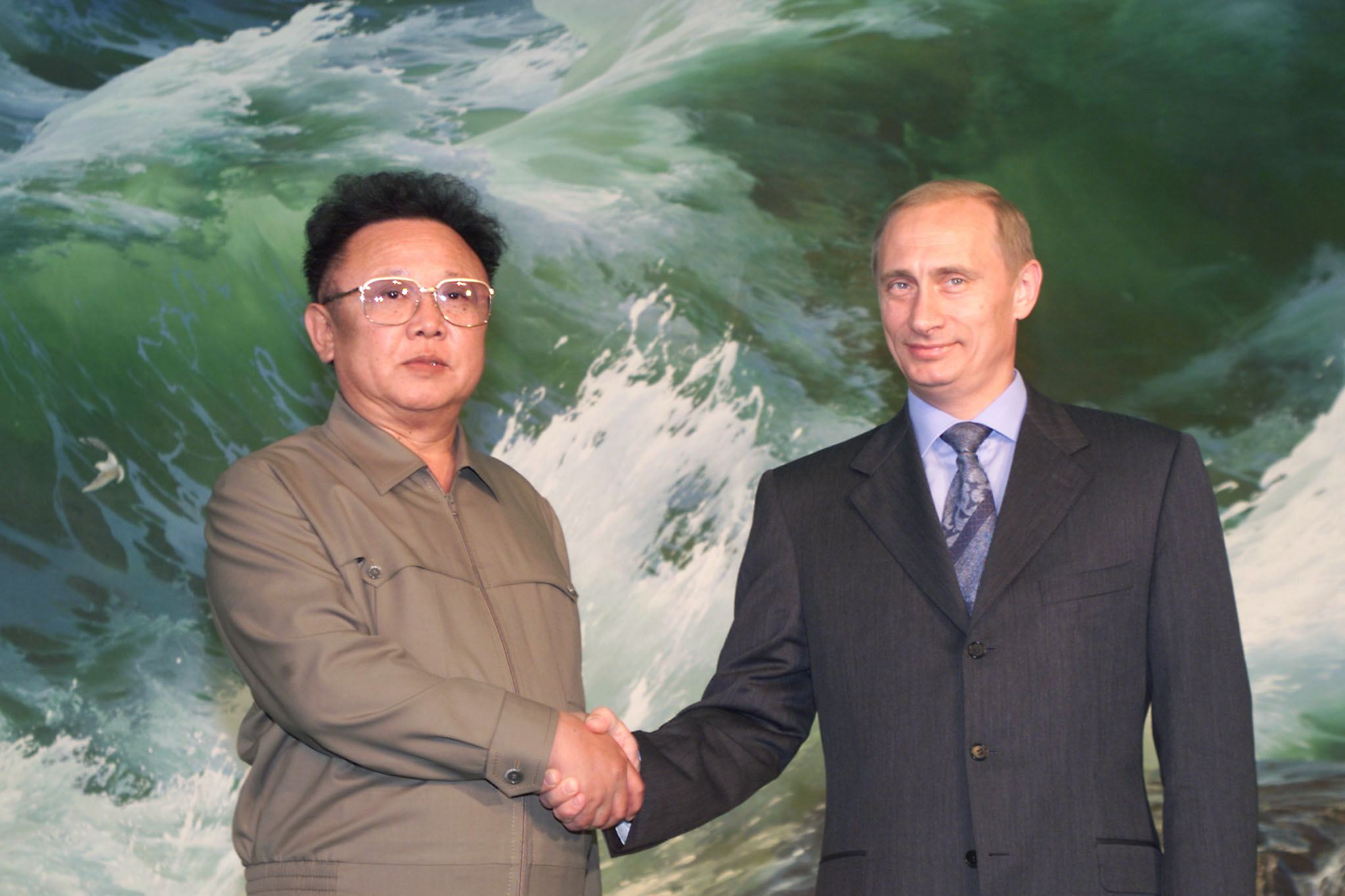
Today, all true socialist and communist countries lack a free press. North Korea, led by the the demented Kim Jung Il; Cuba, led by the Marxist Castro brothers, Venezuela, led by the the megalomaniac Hugo Chavez; and Communist China are the most familiar examples of the above axiom. Some of the countries mentioned lost their freedom of press almost immediately after a revolution — China and Cuba, for example. Others lost it by degrees. Chavez dismantled Venezuela’s free press a little at a time, all the while consolidating his own power. As he became stronger, the press became weaker, until ultimately, it merely became a transcription service for his speeches.

As our country lurches further to the left, we are starting to see the familiar pattern emerge. The administration of Barack Obama has chosen the Venezuelen model. Slowly and methodically, the government’s fingers are wrapping around the neck of the free press.

The first assault was in the form of the “Fairness Doctrine,” an effort to purge conservatives from the airwaves.

Next came the phony “Town Hall Meetings” with the public, where cherry-picked Obama supporters were allowed to toss pre-screened softball questions designed not to embarass the president.

Now, the same concept of pre-screening both the questions and the questioners has been applied to “White House Press Corps Meetings,” the latest of which was such a fiasco that it prompted an angry exchange [video here] between liberal correspondent Helen Thomas and White House Press Secretary Robert Gibbs!

Said Thomas: “Nixon didn’t try to do that. They [the Nixon administration] couldn’t control [the media]. They didn’t try…. What the hell do they think we are, puppets?”

The answer, Ms. Thomas, is “Yes.”


And then this about Rudd where it seems his control of the media is almost as strong as the
Religious (fanatical) Mullahs in Iran.

But Rudd is furious. Newspapers questioned his word over the fake email and he wants redress.

If Kevin Rudd is so obsessed with control (like other totalitarian monsters) how can he run the country. Either you control it, or run it.

Thursday, July 2, 2009

Green Money=Less Jobs

So what is really Al Gore's motives for 'An Inconvenient Truth'? I haven't watched that movie yet and will not watch it. I find that facts are not explored in it.


From The Australian:

Gore is chairman of the Alliance for Climate Protection, an outfit that seeks to "persuade people of the importance, urgency and feasibility" of going green. It recently launched a $US300 million ad campaign to coax American people and politicians to embrace the carbon-lite lifestyle.

But Gore is also chairman of a greeninvestment firm called Generation Investment Management, which is a member of the Copenhagen Climate Council, an international collaboration of businesses and science bodies, and which invests in firms that produce renewable energy and low-carbon technology. So Gore uses one of his multimillion-dollar organisations, the Alliance for Climate Protection, to put pressure on government to promote the low-carbon lifestyle that will furnish one of his other multimillion-dollar organisations, General Investment Management, with booming business.

Kevin Rudd's Bill of Rights a Failure

Bob Carr is against this Socialist/Communist subversive move to undermine the Government of Australia and its traditions and constitution.

Human rights charter is doomed: Carr

BOB Carr has predicted that the Rudd Government's flirtation with a charter of rights for Australia is doomed to failure despite support from Labor luminaries.

The former NSW Labor premier, who has previously warned that a bill of rights would lead to litigation over ``naked strollers'' and ``vegetarian menus'', has urged Kevin Rudd to dump the idea.
The Prime Minister has selected a bill of rights sceptic - priest Frank Brennan - to lead a panel shaping new laws to protect human rights.

Also announced on the panel today are former television news presenter Mary Kostakidis, barrister Tammy Williams and former federal police commissioner Mick Palmer.

One of the architects of the British model yesterday claimed it had become a "villains' charter".

"(But) I just don't think it will take off, politically,'' Mr Carr told The Australian Online today.

"Either a bill of rights or a charter, both proposals represent a shift in power from elected parliaments to unelected judges.


And this:

Rights charter like a dead parrot

  • Bob Carr
  • June 5, 2009


Illustration: John Shakespeare.

Illustration: John Shakespeare.

More judicial review, or judge-made law, is the last thing Australia needs. So nobody should be distressed that the push for an Australian charter of rights is exhausted. "The parrot is dead … It is an ex-parrot," as Monty Python would say.

A charter, according to its supporters, is a list of rights and allows the High Court to make findings of "incompatibility" between these and Commonwealth legislation.

But the constitutional difficulty of designing a charter emerged when two former High Court judges, Sir Gerard Brennan and Michael McHugh, said that requiring the High Court to play an advisory role to Parliament is outside the court's power. The advocates of a charter are self-proclaimed experts on the constitution; this was close to a death blow to something they had worked on for years.

"Moreover, the Australian people are unlikely to endorse any such proposal. Last time it was put to the people in a referendum in 1988 it was soundly defeated.

Human Rights Charter (Bill of Rights) for Australia is a move to Communist State

Whatever guise it is masked under, this is certainly only going to open the floodgates to the marching leftists (Communists) who are more than ready for a Communist state in Australia. It seems Australia is more ready than the US, as the US has a Bill of Rights that was not designed by Communist leftist ideologues.
If we need to have a Bill of Rights it must mirror that of the US and include a right to bear arms (for citizens who are not dangerous). Farmers in Australia have kept guns for years, and it hasn't killed anybody!

Charter would stifle economic freedom


AUSTRALIA is in the final stages of a debate that might lead to the introduction of a federal charter of rights. A consultative committee will report at the end of August to the Attorney-General as to how human rights might be better protected in Australia, and may in fact recommend the implementation of an Australian charter of rights.

Those who support a charter argue that the time has come, as Australia is one of the only common law countries without any kind of charter (or bill) of rights. However, a charter can also have less favourable effects on individual rights and freedoms.

In this time of financial crisis, it is interesting to reflect on the consequences of the US Bill of Rights during the Depression. Following the worldwide crash in financial markets, US president Franklin D.Roosevelt announced the New Deal in 1933 to remake capitalism. Reforms included plans to regulate large parts of the economy and take state ownership of failing companies.

While popular among the public, Roosevelt's program of reform was frustrated by the Bill of Rights as interpreted by the Supreme Court. At the time, a majority of judges held views that might today be described as "radical neoliberalism". A judicially implied right to "freedom of contract" was used by the court to strike down laws regulating everything from a maximum working week to child labour throughout the 1920s and 30s.

Those Americans who viewed judicial activism under a Bill of Rights as a safeguard to economic liberty soon learned that it had an expiry date. As the composition of the bench changed, so did the prevailing judicial philosophy. The US Constitution has since become the basis for the unprecedented control of the national economy in President Barack Obama's "new new deal". This is a common experience internationally, as human rights laws have become a basis to require, rather than restrain, government activity.

As Australia contemplates the implementation of our own bill or charter of rights, it is instructive to consider the experience of countries that have undertaken similar reforms. If recommended by the federal committee, such a charter is expected to take a similar form to that in force in Victoria, the Australian Capital Territory, and Britain, in that it would require any court when interpreting a law to adopt an interpretation that makes that law "compatible" with a list of specified human rights.

In Britain, human rights are routinely used as a basis for making claims on government expenditure. In his new book, The Assault on Liberty, Dominic Raab observes that applicants under the UK Human Rights Act "are now just as likely to press the government for some new category of social support as to seek the limit of its powers".

Even the best intentioned human rights law invites attempts to test government decisions against the rights of affected individuals. Broadly specified rights can be quite easily equated with obligations upon government. For example, consider a government body that makes decisions as to the subsidy of medications. An affected patient might challenge an adverse decision on the basis that it has affected his or her right to life. Such a case has the unhappy consequence that the merits of government policy must be judged by a court against the circumstances of the individual rather than taking account of the most efficient allocation of those resources across other categories of need. The downside is of course that it's bad luck to everyone else waiting for government assistance.

Many Australians have urged for the implementation of a bill of rights like that in force in South Africa, which has gone even further than Britain and specifically included economic and social rights such as shelter or education in its Constitution. Providing for these needs is, of course, a central obligation of any government, but their inclusion in a bill of rights gives courts the power to indirectly control governmental spending. Courts limited to considering the evidence presented in the individual case are ill-equipped to make such broad policy decisions.

Australia is facing the dual challenges of the growing welfare needs of an ageing population and the biggest global financial crisis since the great depression. Implementing a bill or charter of rights would limit the federal government's flexibility in allocating public resources by placing more expenditure decisions in the hands of the courts.

Ben Jellis is a Melbourne lawyer. This is from an article published by the Centre for Independent Studies.

Child Abuse under Welfare

They didn't know how bad the problems were, but they are handing out billions of dollars because of 'Aboriginal disadvantage'. How can they be disadvantaged when they get welfare and the ordinary working Australian does not? One irony is that those not on welfare are not 'disadvantaged', even though they have to work for their money. The situation of the working man and woman in Australia is very good compared to those (including Aboriginals) on welfare.
Shouldn't the Government stop welfare and reform to food vouchers? Thus any alcohol or smokes desired can be purchased through getting a job?
Why is it so many Aboriginals are in jail? Can't we treat them equally and let them work? Um......to do this we need to end welfare, because the pollies just don't get it (except some like Mal Brough, Luke Simpkins, Dennis Jensen, John Howard, Colin Barnett etc).
The best idea I have got is to make 50 tax free zones in Northern Australia of about 100sqkm each where enterprise can move in and with the tax incentives train and teach the Aboriginals to work in business. Remove welfare, bring in food vouchers, and stop public housing and hospital. When the income is above $60 per week, the food vouchers will decrease to $30 per week. And when their income rises to$120 per week, cease the food vouchers.

Stop handing all the money out. It will be better spent on tax free zones in the North to open up major centres, reduce housing costs and prices and also reduce the cost of living. Those that export to overseas from a tax free zone should be given more incentives so Australia can become competitive once again.

Less bureaucracy and more business will actually improve people's lives in this country. Less focus on the so called 'human rights act' and more focus on enterprise and vision that will develop the country's industrial base once again.

Sorry state of indigenous abuse, says Productivity Commission report

ABORIGINAL disadvantage is worse than previously thought, with indigenous children almost seven times more likely to be abused or neglected despite a massive government effort to close the gap with the rest of the population.

COAG meeting
PM, state leaders to tackle health, education problems in Indigenous communities. 07/09 Sky News

Kevin Rudd warned yesterday that indigenous disadvantage was more profound than had been believed as he released a Productivity Commission report that found that although improvements were being made in some areas, the gap between the indigenous population on child abuse and neglect was widening.

The Productivity Commission report, released every two years, found substantiated child abuse cases in the indigenous community more than doubled from 16 per 1000 children in 1999-2000 to 35 per 1000 children in 2007-08.

Raping Law? What the heck is Human Rights????

Can we ask ourselves why is there a push for a human rights 'charter'? Is it that we don't want to give citizens rights but only minority's?

Oh yes it seems 'no one' wants to have a right to bear arms amendment like the 2nd Amendment of the US. No, citizens should never be allowed to defend themselves and criminals should always be able to rape the female. As long as the rapist remains at large, seems like a good law for raping!

More rights for them, not you

Andrew Bolt

Wednesday, July 01, 2009 at 01:11pm

The Australian Human Rights Commission demands the Rudd Government do more for human rights. In particular:

Recommendation 36: The Australian Government should resource a significantly enhanced nation-wide human rights education program.

Recommendation 37: The Australian Government should enhance the powers, functions and funding of the Australian Human Rights Commission, particularly if a Human Rights Act is adopted. Any new functions should be accompanied by appropriate funding.

Recommendation 38: The Commission’s existing functions and powers should be enhanced as follows: ...

Do the words “gravy train” resonate?

Protestors of the West forget Human Rights


The real intention of protestors here in the West is not to protest against victimization but to force a communist regime on the people, which they are doing with some power.
Here, Greg Sheridan outlines the hypocrisy of these ferals that only seem to protest about things that really never should be drawing raised eyebrows.

THE missing actor in the tragic and gruesome story of Iran since the stolen election of June 12 has been the Western human rights lobby. Where is it?

What has happened in Iran is one of the pivotal events of our time. Tens of millions of Iranians voted against their demented President, Mahmoud Ahmadinejad, and the corrupt, clerical misrule he represents. No one seriously doubts the electoral fraud.

With 40 million paper ballots to count, the Iranian authorities announced the result of the election two hours after polls closed.

Supporters of Mir Hossein Mousavi and the other opposition candidates were not allowed to scrutinise the counting. The margin of Ahmadinejad's alleged victory - 11 million votes - was patently absurd. The final touch: the alleged margin was almost identical across most parts of the country, despite huge regional and ethnic differences.

The point is this was not meant to be a convincing fraud. It was a brazen, supremely arrogant exercise in brute power. The votes, in effect, were not counted at all. The process showed the absolute contempt in which the regime holds elections. It demonstrated the dictator's most important asset: the will to power.

Since then the Iranian dictatorship has behaved with remarkable savagery. Hundreds of thousands of Iranians took to the streets to protest the stolen election and to vent their frustration at the medieval dictatorship they are forced to endure.

For the first few days the regime let them protest.

Then Supreme Leader Ayatollah Ali Khamenei warned them to get off the streets. What has followed has been one of the most brutal crackdowns on democratic sentiment in recent years.

The regime acknowledges the deaths of 17 protesters. At least 40 Iranian journalists have been imprisoned. CNN, early in the business, reported 150 protesters had died in a single day.


The hated Basij militia, a unit of the Revolutionary Guard, has savagely beaten hundreds of demonstrators. It has also stabbed, shot and clubbed to death many people.

The image of the beautiful young Neda Agha Soltan as she lay dying after being shot at a demonstration, almost certainly by Basij militiamen, for a moment transfixed the world. Mousavi has described the rulers of Iran as "proponents of a petrified, Taliban-style Islam".

Despite the regime's successful if crude reassertion of basic power, this is a vulnerable time for Ahmadinejad and his cohorts. It is not only that there is popular revolt and division within the clerics. There is also now a flowering international Shia debate about whether clerics should play a direct role in politics. Inside Iran, power has flowed away from Khamenei and the other clerics and towards Ahmadinejad and the Revolutionary Guard.

But an ideologically based dictatorship is often at its weakest when it has to resort to crude military rule.

This was the case when Poland declared martial law in 1981. It was then in plain sight for the world to behold: a military dictatorship, pure and simple. The flimsy rags of ideological purpose that global communism had conferred on the Polish government were stripped away. The Polish regime then, like the Iranian regime today, was to be seen in George Orwell's terms as simply a boot treading on a human face, over and over again.

This is the undeniable story of Iran. So where are the Western demonstrators?

Apart from ethnic Iranians, there has hardly been a single demonstration in any Western capital in support of the Iranian democrats.

Yet isn't there a class, in Australia and in the rest of the West, of people deeply concerned about human rights? The class that Robert Manne and Judith Brett call the moral middle class? Weren't there thousands of demonstrators against the World Trade Organisation and G20 meetings in Australia because the global economy allegedly repressed the rights of poor people?

What about the groups explicitly dedicated to human rights? In the twilight struggle against the communist empire, human rights groups played an honourable and at times indispensable role in gaining freedom for the likes of Soviet dissidents Andrei Sakharov, Natan Sharansky and countless others.

It was a tremendous consolation to these dissidents when a US president, or indeed a humble human rights group, campaigned on their behalf.

Recently I interviewed David Menashri, one of the great authorities in the world on Iran. He was born in Iran and studied for his PhD there. Now he is a professor at Tel Aviv University. He is in no sense a military hawk on Iran. He asked this simple question: "Can't the West exercise its moral muscles? What a gesture it would be if all the European nations, and Australia, temporarily withdrew their ambassadors from Iran in protest at what is happening there."

The truth is the language and practice of human rights advocacy in the West has become completely corrupted by the postmodern ideologies of the contemporary Left. In this parallel universe all crimes are a subset of imperialism and the only true villains are the US, Israel and, for us, Australia.

When Frank Brennan commented that the Victorian human rights charter had been ineffective in its own terms and had little to do with human rights, but had become "a device for the delivery of a soft Left sectarian agenda", he was, perhaps somewhat unconsciously, making a broader point about the debasement and collapse of authentic human rights advocacy in the West.

Where are you on Iran, Louise Adler, happy to accuse Israel of war crimes without the slightest evidence, but apparently unstirred by the murder of hundreds of innocent civilians in Iran?

What have you got to say, Antony Loewenstein, stupidly and inaccurately labelling Israel an apartheid state and approvingly quoted in the Iranian official media, but listless on your blog in the face of the Iranian repression?

What about The Age's cartoonist Michael Leunig, who once drew a cartoon so morally obtuse, stupid and offensive that it was happily accepted by an Iranian newspaper in a competition for cartoons that would offend Jews (the cartoon was submitted without Leunig's knowledge), but who is apparently unmoved to draw an image in sympathy with young Iranian democrats?

The conclusion must be that many Western human rights organisations, and many of the most self-congratulatory and morally vain posturers, are not interested in human rights at all. They are interested in advancing a soft Left sectarian agenda. Except, of course, that the word soft may be wholly misplaced.


Update:

Here it seems there seems to be outrage over a Government trying to prevent sexual abuse among children. But the left don't want to prevent anything, especially war. The first groups to ever denounce war when there seems to be a 'game on', they march around and complain about wars. Geez, if they wanted to stop a war why didn't they just stop and ask Hitler or Stalin (Mahmoud Ahmadinejad or Kim Jong Il)to stop for world peace and human rights? I'm sure those 2 men, having many fans in socialist/communist movements worldwide (Jew-haters), would have listened.